
Deploying the STM32F103RCT6 32-bit Microcontroller (MCU): Engineering Sizing and Scalable Sourcing Strategies

Embedding deterministic computing into factory robotics and medical instruments demands a calculated compromise between computational throughput and physical footprint. Systems architects frequently turn to the STM32F103RCT6 32-bit Microcontroller (MCU) because its balanced silicon architecture delivers dependable real-time control without requiring auxiliary memory chips or active cooling systems.
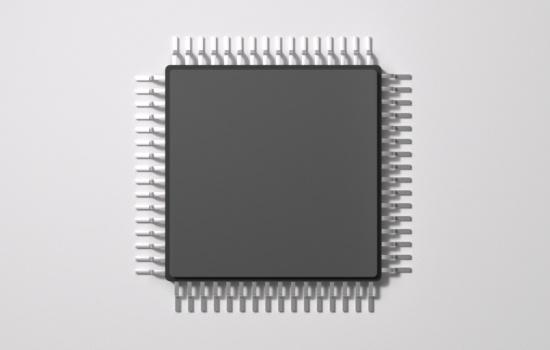
Operating on an Arm Cortex-M3 core at clock frequencies reaching 72 MHz, the platform achieves 1.25 DMIPS per megahertz. Zero-wait-state memory execution accelerates complex motor control mathematics and fast Fourier transform routines, allowing industrial controls to service tightly scheduled interrupt loops with complete timing determinism.
Deterministic Compute and On-Chip Memory Allocation
Firmware expansion frequently triggers severe latency bottlenecks when microcontrollers lack sufficient internal program space. Integrating 256 KB of embedded flash alongside 48 KB of volatile SRAM eliminates external bus latency, providing generous headroom for real-time operating systems, industrial protocol stacks, and secure bootloader routines directly on chip.
Direct memory access controllers maintain continuous data throughput across internal communication buses without consuming central processing bandwidth. Twelve independent DMA channels service serial interfaces and memory blocks concurrently, ensuring that background telemetry logging never interrupts time-critical safety algorithms or closed-loop motion profiling routines executing on the primary core.
Oscillator circuitry accommodates diverse operating environments through factory-calibrated internal 8 MHz RC sources and external high-speed crystal inputs. Programmable phase-locked loop multipliers scale internal operational clocks smoothly up to the 72 MHz ceiling, giving hardware designers precise granular control over dynamic power dissipation and electromagnetic emissions.
Configurable power-down states protect battery-backed industrial field nodes during prolonged dormant intervals. Sleep, stop, and standby modes cut current consumption significantly, while dedicated battery backup domains safeguard real-time clock registers and system settings across broad industrial operating voltages ranging between 2.0 V and 3.6 V.
Real-Time Peripheral Bus Routing and Mixed-Signal Safety
Analog feedback precision dictates the operational stability of variable-frequency motor drives and digital power converters. Deploying the STM32F103RCT6 32-bit Microcontroller (MCU) simplifies sensor integration by consolidating dual 12-bit analog-to-digital converters, dedicated PWM generators, and robust input-output protection inside a standardized 64-pin LQFP package.
Dual successive-approximation ADCs achieve sampling rates up to 1 megasample per second across 16 shared channels. Synchronized dual-conversion modes capture motor phase currents and DC bus voltages simultaneously, providing the instantaneous analog feedback necessary for accurate field-oriented control algorithms and rapid overcurrent fault detection.
Advanced control timers generate complementary pulse-width modulation signals equipped with hardware-enforced dead-time insertion. Programmable dead-time prevents catastrophic shoot-through conditions in high-voltage power bridges, while emergency brake inputs disengage gate drivers instantly whenever external monitoring circuits report overcurrent or overtemperature events.
Interfacing versatility remains robust across multiple serial communications buses, incorporating CAN 2.0B, full-speed USB, three SPI ports, two I2C channels, and five USARTs. Up to 51 general-purpose I/O pins tolerate 5 V logic levels, simplifying schematic designs by connecting directly to legacy industrial transceivers without auxiliary level shifters.
Auditing an Industrial MCU Supplier for Production Continuity
Scaling an embedded prototype to mass assembly introduces severe manufacturing, procurement, and logistical dependencies. Partnering with a vetted MCU supplier protects manufacturing schedules from unexpected factory allocation holds and extended delivery lead times, allowing automated surface-mount assembly lines to maintain steady, predictable build velocities.
Procurement specialists evaluate distribution partners through traceability audits, warehouse handling standards, and lot date-code verification. A qualified MCU supplier manages structured safety stock agreements and flexible shipment pacing, helping manufacturing executives control carrying costs while shielding continuous production lines against sudden market allocation spikes.
Comprehensive component coverage requires distribution partners with broad semiconductor relationships and substantial warehouse logistics. Unibetter distributes a wide range of electronic components, maintaining established supply relationships that allow industrial OEMs to satisfy complex BOM requirements even during tight market cycles.
Responsive quotation turnarounds and accurate factory lead-time reporting enable purchasing teams to plan inventory cycles efficiently. Electronics manufacturing operations succeed when distribution partners provide transparent pipeline tracking, responsive bill-of-materials pricing, and timely engineering change notifications well before scheduled production releases.
Authenticity Verification and Sourcing Economics
Counterfeiting creates severe reliability hazards across mission-critical aerospace, energy, and medical electronics assemblies. Unauthorized gray-market brokers frequently circulate remarked, re-packaged, or harvested integrated circuits that degrade under high thermal stress, leading to premature field breakdowns and catastrophic commercial product recall campaigns.
Unibetter sources and procures electronic components from franchised sources to guarantee 100% authentic, quality-assured and brand-new electronic components. UniBetter’s incoming inspection capabilities include visual inspection, packaging testing, acetone testing, X-ray inspection, and electrical performance testing, depending on the verification requirements.
Controlling component expenditures requires global sourcing channels that combine verified quality with competitive market pricing. UniBetter’s global sourcing team works to identify cost-effective procurement options based on customers’ component requirements and market conditions.
Structured procurement protocols integrate comprehensive documentation reviews with end-to-end packaging integrity checks. Hardware companies preserve project margins by engaging distribution specialists who verify manufacturer certificates of conformance, audit electrostatic discharge handling procedures, and manage moisture-sensitive packaging standards across all fulfillment stages.
Managing Semiconductor Obsolescence Across Multi-Year Deployments
Sustaining industrial equipment across extended operational lifetimes requires careful alignment between silicon maturity and inventory logistics. Microcontrollers engineered with flexible peripheral pinouts and rich internal resources allow engineering teams to release incremental firmware revisions over decades without undergoing expensive printed circuit board redesigns.
Engaging with Unibetter enables manufacturing organizations to unite rigorous hardware specifications with dependable international distribution pipelines. Securing genuine microcontrollers through disciplined procurement practices ensures that industrial automation systems, robotics platforms, and medical controllers maintain stable production schedules, predictable component expenses, and uncompromised field performance.