
Magnesium Alloy Double-Frame: 50% Transparency with 20 m Hanging

At the perimeter of a transparent LED cabinet, the frame occupies space that might otherwise remain open to the view. That same frame also carries loads and connects neighboring units. Making the edge more open therefore involves a structural design problem, with material, section shape and reinforcement all contributing to the answer.
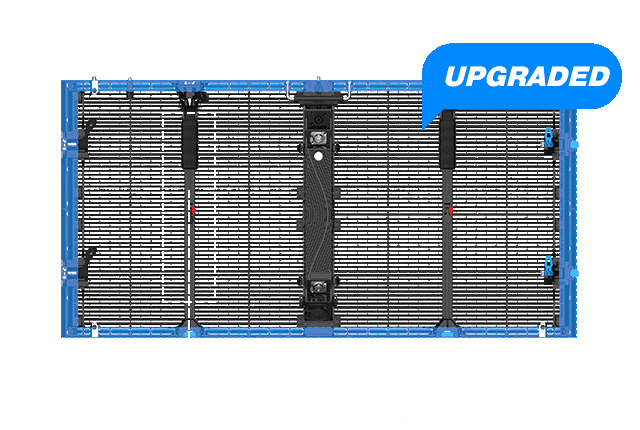
MT II approaches transparent display technology through a magnesium-alloy hollow double frame. Its open surface and hanging capability emerge from different aspects of that construction. Examining the cabinet edge first, then following its connections into an assembled screen, reveals how openness and load-bearing structure coexist without treating either specification as a substitute for the other.
What Changed at the Cabinet Edge
YES TECH revised the solid side frames of the original MT design when developing MT II. The newer cabinet uses high-grade magnesium alloy in a hollow double-frame structure with reinforcing ribs.
This extends the transparent area toward the edges, where the earlier side frames occupied more of the view through the assembly. Across rows of cabinets, the repeated edge treatment becomes part of the wall’s overall pattern of visible structure.
A frame section contains both material and space. The double-frame arrangement organizes that material around openings, while reinforcing ribs contribute to its structural form. Describing the cabinet simply as magnesium alloy leaves out these geometric choices.
The material name alone provides no ranking against carbon fiber or aluminum frames built with different sections and connections. Reinforcement and connection geometry remain part of that comparison.
In its mesh configuration, MT II provides at least 50% transparency. That figure describes an open display surface, including the continuing presence of its physical elements. Here, transparent display technology includes the perimeter as well as the areas between LEDs. The revised edge contributes to the visible opening while remaining part of the cabinet’s connected framework.
From Neighboring Cabinets to the Supporting Structure
A hanging array brings many cabinet joints into the same load-bearing system. Loads reach the hanging beam through the connected cabinets and their attachment points, then pass through rigging equipment to the venue or temporary stage structure. The beam joins the display to its supports rather than removing either from the structural calculation.
MT II’s normal hanging capability reaches 20 m, compared with 10 m for the original MT system. Those figures describe the respective product capabilities within engineered configurations. An outdoor rental LED screen approaching the stated height still depends on its assembled dimensions, selected connections, rigging arrangement and supporting structure, alongside the conditions at the installation site.
Mesh openings also let air pass through the display. Their effect on wind loading varies with screen dimensions, position, configuration and local conditions. A tall narrow arrangement and a broad shallow one present different geometries for that work.
A high open-area percentage cannot independently determine the forces on the array. The frame contributes its load-bearing structure; engineering carries that assessment across the joints, through the rigging and into the actual support above.
Cabinet Weight Starts with Cabinet Dimensions
The two MT II formats occupy different areas and carry different weight figures. A 1000 by 500 by 83 mm cabinet weighs 7.9 kg in mesh form or 8.7 kg in solid form. The smaller 500 by 500 by 83 mm cabinet weighs 5.8 kg. Those three entries identify different components within a proposed cabinet inventory.
Consequently, a list of cabinet quantities needs the sizes and configurations before their masses can be combined. In an outdoor rental LED screen, the two formats may contribute different increments to the proposed outline.
Attaching 7.9 kg to every cabinet would erase that distinction and produce an unreliable starting quantity for the structural assessment. A useful quantity schedule preserves one line for each relevant cabinet type rather than a series-wide average.
The assembled weight includes more than those cabinet entries. Beams, cables and rigging equipment add their own contributions, with the chosen supporting arrangement determining the complete package. Cabinet mass remains useful because it identifies a defined component of that package. It becomes misleading only when that component is allowed to represent everything suspended at the installation.
Openness, Protection and Image Output
Other specifications describe what happens at the display surface. Both cabinet sizes provide IP65 protection against dust and specified water-jet exposure, rather than immersion. The rating concerns protected equipment, while the openings retain their visual and airflow roles. An outdoor rental LED screen can possess both characteristics because they refer to different physical aspects of its construction.
At the upper end of MT II’s 4000–4500-nit white-balance brightness range, 4500 nits requires the optional high-brightness solution. Both cabinet formats specify a refresh rate of 7680 Hz. Refresh rate concerns image timing, and brightness concerns light output.
Neither measurement supplies a structural capacity. Pixel spacing provides another measurement: 3.9 mm horizontally and 7.8 mm vertically. Within transparent display technology, these display properties accompany the frame design without explaining how suspended loads are carried.
The hollow edge, reinforcing ribs and connected supports describe the route behind MT II’s hanging capability. Mesh openness describes the view through that structure, and cabinet weights identify pieces of the array. Together, these details present a cabinet whose transparent surface extends toward its perimeter while its frame remains engaged in the work of supporting the assembled display.